


Key facts
- The bill is headed to President Donald Trump’s desk and has not yet been signed into law1 2
- The evidence generally must stay in the United States.2 The bill does not change law enforcement’s legal duties.2
- Klobuchar said the bill will save time and resources in child abuse investigations and prosecutions by allowing officers to safely.1
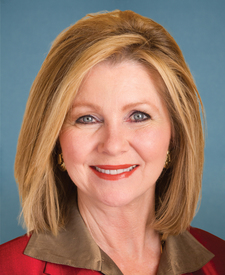
A bill sponsored by Gov.-elect Marsha Blackburn to streamline evidence storage in child sex abuse cases unanimously passed in the U.S. Senate on Nov. 16..1
“Investigators fighting child sexual exploitation need to securely store the evidence of these horrific crimes, and we’re giving them the tools,” Blackburn said.
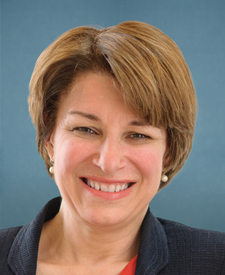
The bill is called the Safe Cloud Storage Act..1 It is co-sponsored by Blackburn, a Republican, and Minnesota U.S. Sen. Amy Klobuchar, a Democrat.1
The bill is headed to President Donald Trump’s desk..1 As of Nov. 18, Trump had not signed it into law.2
What the bill would do
The bill would let law enforcement agencies hire approved cloud service providers to help manage digital evidence.2
Police, prosecutors and investigators could contract with a qualified company to store digital evidence, make it available to authorized agencies when requested, and provide technical or forensic processing support.2
The bill would let investigators use secure cloud systems to manage evidence instead of relying only on physical drives or computer servers at individual agencies.2
The bill protects only cloud companies hired by law enforcement to store or help review evidence..2 The companies must follow the bill’s security rules.2
A company could still face legal action if it mishandles the evidence, acts negligently or uses it for a reason unrelated to the investigation.2
Companies would have to encrypt the evidence, limit which employees can access it and pass an independent security audit every year.2
The evidence generally must stay in the United States..2 The bill does not change law enforcement’s legal duties.2
Who backed the bill
The bill was endorsed by the National Center for Missing and Exploited Children, Fraternal Order of Police, National District Attorneys Association, Association of State Criminal Investigative Agencies, and the National Center on Sexual Exploitation.1
Klobuchar said the bill will save time and resources in child abuse investigations and prosecutions by allowing officers to safely store, transmit and evaluate evidence using cloud systems.1
Other bills Blackburn is pushing
Blackburn is also working to pass her NO FAKES Act, which would establish a federal right protecting human voices and visual likenesses from AI-generated replication.1
“AI should empower innovation, not give scammers and online predators a free pass to exploit someone’s voice and visual likeness without permission,” Blackburn said.
Blackburn has spent much of her time in Washington since her gubernatorial victory..1 Blackburn is continuing to serve in the U.S. Senate while her transition team prepares for her to take the governor’s office in January.1
Blackburn’s Safe Cloud Storage Act is her first legislative victory since being elected governor, passing with unanimous support on Nov. 16.1
The Kids Online Safety Act would hold social media companies accountable for harms like eating disorders, addiction and suicide their platforms are accused of causing in children and teens..1 The Kids Online Safety Act came close to passing in 2024, but differences between the House and Senate versions held it up.1